Kenya on the Right Trajectory for the Global Maritime Labour Supply
The Government has reaffirmed that Kenya is on the right trajectory for the global maritime labour supply.
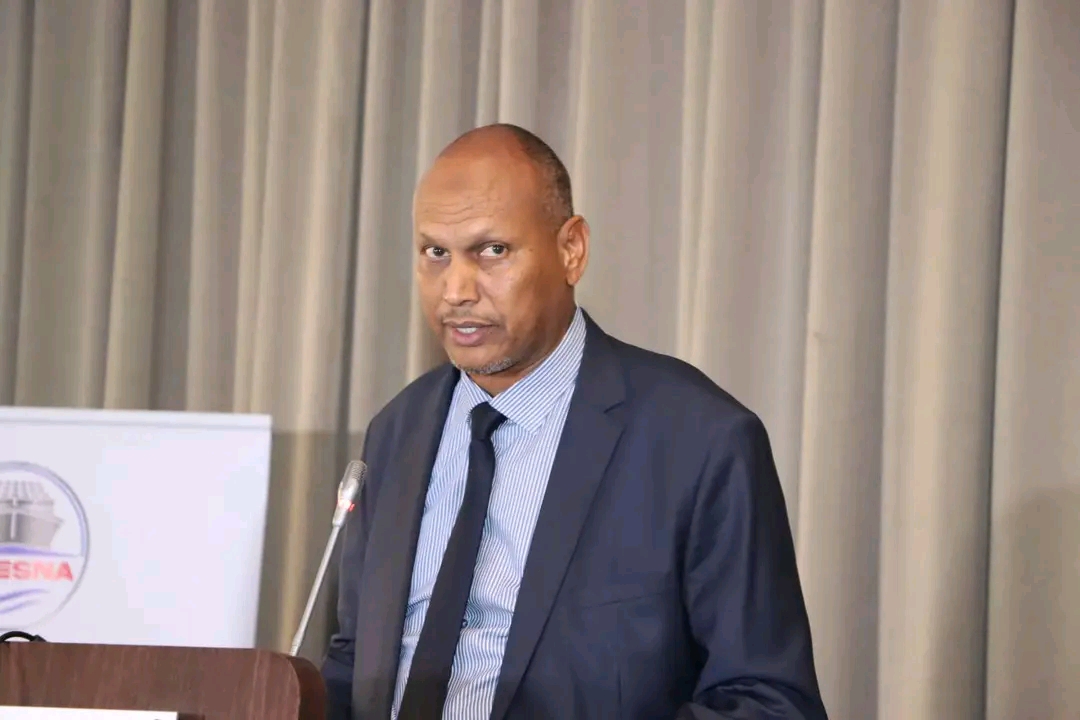
Speaking to the press, the Principal Secretary State Department for Shipping and Maritime Affairs Aden Millah, noted that eleven Maritime Education and Training (MET) institutions have so far been accredited to offer maritime training in Kenya and beyond.
“Kenya is ready for the global maritime labour supply and so far, through the State Department for Shipping and Maritime Affairs agency; the Kenya Maritime Authority (KMA), eleven Maritime Education and Training (MET) institutions have so far been accredited to offer maritime training in Kenya and beyond.
The PS exuded confidence that the eleven Maritime Education and Training (MET) institutions are up to the task to train various individuals to absoluteness in order to churn out competently trained personnel with up-to-date industrial demands in the maritime sector.
The Principal Secretary added that the eleven Maritime Education and Training (MET) institutions are offering various training programmes in the maritime sector.
The eleven accredited Maritime Education and Training (MET) institutions by Kenya Maritime Authority (KMA) to offer maritime training include; Bandari Maritime Academy,the Kenya Coast National Polytechnic, Habour View Maritime Training Institute, Mount Kenya Maritime Training Institute, Railways Training Institute, Pioneer International University, Premier Maritime Training Institute, Technical University of Mombasa, Kisumu Maritime Center, Jomo Kenyatta University of Agriculture and Technology and Indian Ocean Maritime Training Center.
The PS disclosed that in today’s market, the global merchant fleet comprises of over 110,000 vessels with approximately 55,000 ships engaged in international trade adding that all these ships require skilled professionals across all ranks from able seamen to engineers and masters.
According to the Kenya Maritime Authority data, there are approximately 1.89 million seafarers serving on international vessels globally and it’s projected to experience a shortage in 2026.
The offshore energy sector employs an additional 250,000 workers across approximately 7,300 offshore supply vessels with nearly 550 floating production storage and offloading units (FPSOs) and a round 750 active offshore drilling rigs.
The cruise industry operates approximately 350 ocean-going vessels employing over 250,000 crew members, with projections showing continued growth as tourism rebounds post-pandemic.
“Kenya is strategically positioned along key shipping routes and with the accreditation of the eleven Maritime Education and Training (MET) institutions, it’s a commendable step for the country to ensure that its youth acquire absolute end to end training in the maritime sector in order to compete globally,” noted PS Millar.